Communication is often viewed as a straightforward exchange of information. However, communication theorists have long emphasized that the process is far more complex. Even when a message is clearly constructed, it may not be accurately received or interpreted.
One of the most significant factors contributing to this breakdown is noise—a central concept in communication theory.
Theoretical Foundation: The Shannon-Weaver Model
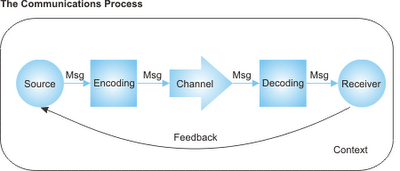
The concept of noise is most prominently illustrated in the Shannon-Weaver Model, one of the earliest and most influential models of communication. This model outlines communication as a linear process involving:
- Sender
- Encoder
- Channel
- Decoder
- Receiver
Within this framework, noise is any interference that disrupts the signal as it travels through the channel.
Originally developed to improve telecommunications, the model remains highly relevant in analyzing human communication, particularly in environments where messages are frequently distorted or interrupted.

Revisiting the Four Types of Noise
While the Shannon-Weaver model introduces noise broadly, contemporary communication studies categorize it into four distinct types:
1. Physical Noise
External, environmental interference that disrupts message transmission.
2. Psychological Noise
Internal mental or emotional states that affect interpretation.
3. Physiological Noise
Biological conditions that limit the ability to process information.
4. Semantic Noise
Confusion arising from language, symbols, or meaning.
Case Studies: Noise in Everyday Communication
To fully understand the impact of noise, it is useful to examine how it operates in real-world contexts.
Case Study 1: Digital Miscommunication (Semantic + Psychological Noise)
Scenario:
A student sends a brief message: “Okay.”
Outcome:
The receiver interprets the message as dismissive or irritated.
Analysis:
Semantic noise: Lack of tone and context in text-based communication
Psychological noise: The receiver’s assumptions or emotional state shape interpretation
Insight:
Digital communication amplifies semantic noise because nonverbal cues are absent.
Case Study 2: Multitasking in Academic Settings (Physical + Psychological Noise)
Scenario:
A student attempts to follow a lecture while checking notifications on their phone.
Outcome:
Key information is missed or misunderstood.
Analysis:
Physical noise: Device interruptions
Psychological noise: Divided attention reduces comprehension
Insight:
Even minimal distractions can significantly impair message retention.
Case Study 3: Fatigue and Communication Breakdown (Physiological Noise)
Scenario:
An individual studies late into the night and struggles to understand reading material.
Outcome:
Misinterpretation and reduced comprehension.
Analysis:
Physiological noise: Fatigue limits cognitive processing
Insight:
Effective communication depends not only on clarity, but also on the receiver’s physical readiness.
Case Study 4: Ambiguous Language in Group Work (Semantic Noise)
Scenario:
A team member instructs others to “finish the project soon.”
Outcome:
Group members interpret “soon” differently, leading to missed deadlines.
Analysis:
Semantic noise: Vague language leads to inconsistent understanding
Insight:
Precision in language is critical for shared meaning.
Why Noise Is Increasing in Contemporary Communication
Several factors contribute to the growing impact of noise among teens and young adults:
A. Increased reliance on digital communication
B. Constant exposure to notifications and media
C. Cultural and linguistic diversity
D. Higher levels of multitasking
These conditions create an environment where multiple forms of noise often occur simultaneously, increasing the likelihood of miscommunication.
Strategies for Reducing Noise: An Applied Approach
Drawing from both theory and practice, the following strategies can improve communication effectiveness:
1. Control the Communication Environment: Reduce external distractions when conveying important information.
2. Develop Self-Awareness: Recognize how internal states (stress, assumptions) influence interpretation.
3. Prioritize Clarity and Precision: Use specific, unambiguous language.
4. Adapt the Channel: Select appropriate communication methods (e.g., verbal vs. written) based on message complexity.
5. Encourage Feedback: Confirm understanding to ensure the message was received as intended.
Conclusion
Noise is an unavoidable component of the communication process, yet it is often underestimated. Through the lens of the Shannon-Weaver Model, it becomes clear that communication breakdowns are not simply the result of poor messaging, but of interference at various stages of transmission and interpretation.
By identifying and addressing different types of noise, individuals can significantly improve both the clarity and effectiveness of their