Understanding Noise in the Communication Process


Communication is often viewed as a straightforward exchange of information. However, communication theorists have long emphasized that the process is far more complex. Even when a message is clearly constructed, it may not be accurately received or interpreted.

One of the most significant factors contributing to this breakdown is noise—a central concept in communication theory.


Theoretical Foundation: The Shannon-Weaver Model

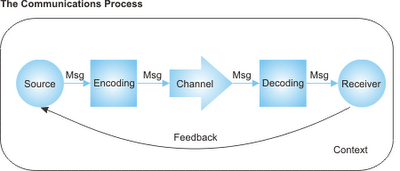
The concept of noise is most prominently illustrated in the Shannon-Weaver Model, one of the earliest and most influential models of communication. This model outlines communication as a linear process involving:

  • Sender
  • Encoder
  • Channel
  • Decoder
  • Receiver

Within this framework, noise is any interference that disrupts the signal as it travels through the channel.

Originally developed to improve telecommunications, the model remains highly relevant in analyzing human communication, particularly in environments where messages are frequently distorted or interrupted.


Revisiting the Four Types of Noise

While the Shannon-Weaver model introduces noise broadly, contemporary communication studies categorize it into four distinct types:

1. Physical Noise

External, environmental interference that disrupts message transmission.

2. Psychological Noise

Internal mental or emotional states that affect interpretation.

3. Physiological Noise

Biological conditions that limit the ability to process information.

4. Semantic Noise

Confusion arising from language, symbols, or meaning.


Case Studies: Noise in Everyday Communication

To fully understand the impact of noise, it is useful to examine how it operates in real-world contexts.

Case Study 1: Digital Miscommunication (Semantic + Psychological Noise)

Scenario:

A student sends a brief message: “Okay.”

Outcome:

The receiver interprets the message as dismissive or irritated.

Analysis:

Semantic noise: Lack of tone and context in text-based communication

Psychological noise: The receiver’s assumptions or emotional state shape interpretation

Insight:

Digital communication amplifies semantic noise because nonverbal cues are absent.


Case Study 2: Multitasking in Academic Settings (Physical + Psychological Noise)

Scenario:

A student attempts to follow a lecture while checking notifications on their phone.

Outcome:

Key information is missed or misunderstood.

Analysis:

Physical noise: Device interruptions

Psychological noise: Divided attention reduces comprehension

Insight:

Even minimal distractions can significantly impair message retention.


Case Study 3: Fatigue and Communication Breakdown (Physiological Noise)

Scenario:

An individual studies late into the night and struggles to understand reading material.

Outcome:

Misinterpretation and reduced comprehension.

Analysis:

Physiological noise: Fatigue limits cognitive processing

Insight:

Effective communication depends not only on clarity, but also on the receiver’s physical readiness.


Case Study 4: Ambiguous Language in Group Work (Semantic Noise)

Scenario:

A team member instructs others to “finish the project soon.”

Outcome:

Group members interpret “soon” differently, leading to missed deadlines.

Analysis:

Semantic noise: Vague language leads to inconsistent understanding

Insight:

Precision in language is critical for shared meaning.


Why Noise Is Increasing in Contemporary Communication


Several factors contribute to the growing impact of noise among teens and young adults:

A. Increased reliance on digital communication

B. Constant exposure to notifications and media

C. Cultural and linguistic diversity

D. Higher levels of multitasking

These conditions create an environment where multiple forms of noise often occur simultaneously, increasing the likelihood of miscommunication.


Strategies for Reducing Noise: An Applied Approach

Drawing from both theory and practice, the following strategies can improve communication effectiveness:


1. Control the Communication Environment: Reduce external distractions when conveying important information.


2. Develop Self-Awareness: Recognize how internal states (stress, assumptions) influence interpretation.


3. Prioritize Clarity and Precision: Use specific, unambiguous language.


4. Adapt the Channel: Select appropriate communication methods (e.g., verbal vs. written) based on message complexity.


5. Encourage Feedback: Confirm understanding to ensure the message was received as intended.


Conclusion

Noise is an unavoidable component of the communication process, yet it is often underestimated. Through the lens of the Shannon-Weaver Model, it becomes clear that communication breakdowns are not simply the result of poor messaging, but of interference at various stages of transmission and interpretation.

By identifying and addressing different types of noise, individuals can significantly improve both the clarity and effectiveness of their 

Summary Writing Guide for Communication Studies Exam

Summary writing or concise writing is a skill often tested for in many subjects, especially Communication Studies. In this blog you will learn:

  • What is the purpose of a summary
  • What makes a good summary
  • Summary writing tips and tricks


Understanding the Purpose of a Summary

A summary condenses the original text, presenting the main ideas in a concise form. For the Communication Studies exam, this skill is critical for demonstrating comprehension and the ability to distill key information effectively.

Key Components of a Good Summary

Brevity: Summaries should be short, typically 1/3 of the original text.

Clarity: Avoid vague language and clearly present the main points.

Objectivity: Only include information from the source without inserting personal opinions or interpretations.

Accuracy: Ensure that the original meaning of the text is retained.


Steps to Writing an Effective Summary

Step 1: Read and Understand the Text

  • Read the passage carefully at least twice.
  • Identify the main ideas and supporting details.
  • Pay attention to the topic sentences of paragraphs, as they often summarize the key point.

Step 2: Identify Key Information

  • Eliminate any unnecessary information like examples, anecdotes, or opinions.
  • Focus on the "who, what, where, when, why, and how" of the text.

Step 3: Create a Draft

  • Use your own words to rewrite the key ideas.
  • Ensure you are preserving the meaning but shortening the content.
  • Avoid using direct quotes unless necessary.

Step 4: Revise for Conciseness

  • Make sure your summary is brief while covering all essential points.
  • Revise for grammatical correctness, coherence, and fluidity.

Step 5: Edit for Accuracy

  • Compare your summary to the original text. Ensure all the important ideas are included and no significant points are omitted.


Common Pitfalls in Summary Writing

Too much detail: Including minor points or examples that should be left out.

Paraphrasing too closely: Rewriting the text too closely to the original wording.

Missing the main idea: Focusing on secondary points rather than the primary argument.

Adding personal opinions: The summary should reflect the author’s ideas, not your views.


Practice Tips

Timed Practice: Practice summarizing under exam conditions, where time is limited. Set a timer for 10-15 minutes and work to condense a text within that timeframe.

Vary Text Types: Practice with a variety of texts such as articles, essays, and speeches. This helps in becoming adaptable to different writing styles and content structures.

Peer Review: Swap summaries with classmates for feedback. Others may notice details you missed or highlight where you might be too vague or too detailed.


Free Online Resources for Practice

Summary Writing Exercises:

Purdue Online Writing Lab (OWL): Provides exercises on summarizing and paraphrasing, along with examples.

  - Summary Writing Guide

Khan Academy: Offers exercises that involve reading comprehension and summarization of texts.

  - Khan Academy Practice

Reading Passages for Summary Practice:

CommonLit: A free collection of texts with questions that help in understanding main ideas, perfect for practicing summaries.

  - CommonLit Free Texts

Newsela: Provides articles at varying reading levels with options to practice writing summaries.

  - Newsela Practice

Summary Writing Worksheets:

Education.com: Offers free worksheets and printables for practicing summary writing skills.

  - Education.com Worksheets


Conclusion

By incorporating these steps and using the free resources, you can improve your summary writing skills and be better prepared for any exam, especially a Communication Studies exam.

You may also want to read:

Main point vs. Purpose

The Creole Continuum

English Creoles are vibrant and diverse languages that have evolved from the fusion of English with various African, indigenous, and other linguistic influences. One fascinating aspect of these Creoles is the concept of the Creole Continuum, which encompasses a range of linguistic varieties, from the most similar to standard English (acrolect) to the most divergent (basilect). Understanding this continuum offers insight into the rich linguistic tapestry of English Creoles and their importance in cultural identity.


The Creole Continuum

At the heart of the Creole Continuum lies the idea that within a single Creole language, there exists a spectrum of linguistic forms, each with its own characteristics and usage. 


Acrolect

At one end of the continuum is the acrolect, which closely resembles standard English in vocabulary, grammar, and pronunciation. Speakers of the acrolect may code-switch between their Creole and standard English, depending on the context.


Mesolect

Moving along the continuum, we encounter mesolectal varieties, which exhibit a blend of Creole and standard English features. These forms may include some Creole vocabulary and grammatical structures while maintaining overall intelligibility with speakers of the acrolect.


Basilect

Finally, at the other end of the continuum lies the basilect, characterized by its maximal divergence from standard English. Bassilectal varieties often feature extensive lexical innovation, distinct grammatical patterns, and phonological differences that may challenge comprehension for speakers of the acrolect.


Example of the Creole Continuum

Let's take Jamaican Creole (also known as Jamaican Patois) as an example to illustrate the Creole Continuum. In its acrolectal form, Jamaican Creole may be spoken by individuals in formal settings or those who have had more exposure to standard English education. The acrolectal speaker might say, "Good morning, how you do?" which closely resembles standard English.


As we move towards the mesolect, we might hear a speaker say, "Wa gwaan, yuh good?" This version retains some English vocabulary ("good") but incorporates Creole features such as "wa gwaan" (what's going on) and "yuh" (you).


Finally, in the basilectal form, we might hear someone say, "Wa, gwaan?",  "Wa yuh deh pon?", "Wa, gallang?" or "Wah di pree?" Here, we see further divergence from standard English with phrases like "wha'appen" (what happened) and "yuh good", showcasing the creativity and uniqueness of the basilect.


Significance of the Creole Continuum

Understanding the Creole Continuum is essential for appreciating the linguistic diversity and cultural heritage embedded within English Creoles. It challenges the notion of a monolithic "standard" language and celebrates the richness of linguistic variation within Creole-speaking communities.


Furthermore, the Creole Continuum serves as a tool for identity expression, allowing speakers to navigate their linguistic repertoires based on social context, audience, and personal preferences. Whether speaking the acrolect at work, the mesolect with friends, or the basilect at home, individuals can fluidly adapt their language to suit different communicative needs.


Conclusion

In conclusion, the Creole Continuum offers a fascinating glimpse into the dynamic nature of English Creoles and the diverse linguistic landscapes they encompass. By exploring the continuum, we gain insights into the complex interplay between language, culture, and identity, highlighting the resilience and creativity of Creole-speaking communities worldwide. Embracing the Creole Continuum encourages us to celebrate linguistic diversity and recognize the value of every linguistic expression along the spectrum.

What is Slang?

There are varied definitions for slang. Slang can be described as relative and elusive, being hard to define as it encompasses the popular, the fashionable, the ease of reference and the obscene.

According to the dictionary of Language & Linguistics, slang is ‘a variety of speech characterized by the newly coined and rapidly changing vocabulary used by the young, social and professional groups for ‘in-group’ communication and thus tending to prevent understanding by most of the speech community. 

Slang is a very vibrant and ingenious vehicle of communication which reveals what is of importance and interest to a community. However, the most important aspect of slang is that it is language used below the level of stylistically neutral language. 

Here are five other characteristics of slang:

1. Typical of Informal SituationsIt is the domain where its use is most expected and accepted and when used in formal situations signal change in relationships. 


2. It is Creative. The point of inventing slang words is to be startling, amusing, shocking, a creation that ensures that the new item stands out against the other, more ordinary lexical items. 


Current Jamaican Slang (2022)

3. Characterized by a short life span in a language if used too frequently, overtime they lose their impact and have to be replaced by fresh new words. (However some slang words do become everyday common words over time.)


4. Can be exclusive, acting as a wall between native speakers and outsiders. By choosing the right words one is able to signal which group they belong to. 


5. Is used by different groups at different stylistic levels. Some social groups use more slang than others.


Slang words and phrases are often ‘invented’ in keeping with new ideas and customs. They may also represent current trends and attitudes better than the more conservative items of the vocabulary. 


Conclusion

1. Slang is a set of expressions characteristic of informal speech.

2. Slang changes rapidly 

3. Slang often serves as a means of solidarity within a community and as a barrier or fence to outsiders.


Featured post

The Communication Process & The Elements of Communication

Systematic=Step by Step=Process Communication as a Process Human communication is interpersonal, it is purposive and it is a process....